The 2026 Guide to Semantic SEO: How AI is Changing the Way We Rank
In 2026, the question is no longer "What keywords are people searching for?" but "What is the intent behind the search, and how does your brand solve it?" As Google, Gemini, and ChatGPT move deeper into Search Generative Experience (SGE), the traditional SEO playbook—once centered on keyword density and manual backlink counts—is being rewritten by Semantic Engineering.
At DSS Media, we have been navigating search algorithm shifts since 2004. Today, we are witnessing the most significant transformation in the history of the web: the move from a "Library of Links" to an "Engine of Answers."
1. From Keywords to Entities
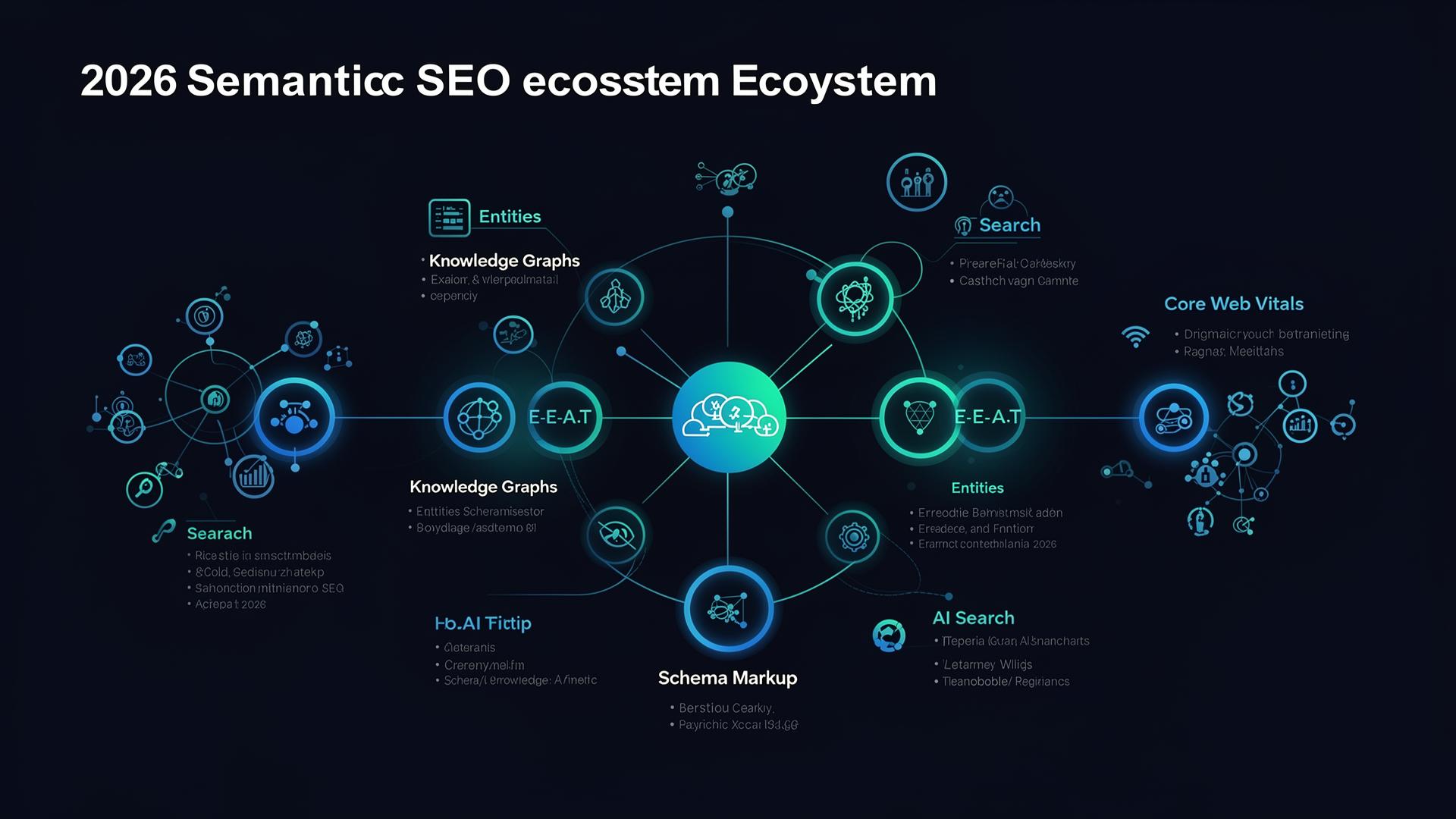
The core of Semantic SEO is the Entity. An entity is a well-defined object or concept—like "DSS Media," "SEO," or "Dublin"—that search engines can uniquely identify.
Why it matters: AI models don't just "read" your text; they map the relationship between entities.
The Strategy: Instead of stuffing a page with "SEO services," we build a Knowledge Graph around your brand, linking it to related concepts like "Technical Audits," "E-E-A-T," and "Schema Markup."
2. Solving for "Information Gain"
AI search agents (Gemini and ChatGPT) prioritize content that offers "Information Gain"—the inclusion of new, unique data or expert perspectives that aren't found elsewhere.
The Audit Finding: Generic or placeholder content like "Lorem Ipsum" is viewed as "thin" and results in severe penalties.
The DSS Media Approach: We replace generic filler with data-driven blueprints and real-world Q&As that satisfy both the user's curiosity and the AI's need for structured data.
3. The Role of E-E-A-T in 2026
Experience, Expertise, Authoritativeness, and Trustworthiness (E-E-A-T) are the pillars of modern search.
- Experience: Showcasing our 22-year track record in digital strategy.
- Expertise: Utilizing advanced JSON-LD Schema to prove to Google exactly what services we provide.
- Authoritativeness: Strengthening our "Brand Entity" through verified author bios and deep technical analysis.
- Trust: Maintaining NAP Consistency (Name, Address, Phone) across the web, anchored by our Dublin headquarters.
4. Technical Foundations: Speed and Structure
You cannot rank in 2026 if your technical foundation is fractured.
Core Web Vitals: We optimize for LCP (Largest Contentful Paint) and CLS (Cumulative Layout Shift) to ensure an instant, stable user experience.
Structured Data: Every service—from PPC Management to Reputation Management—must be wrapped in JSON-LD so AI bots can instantly "read" the offer, price, and provider.
5. Local Authority and Semantic SEO
For businesses targeting geographic markets, Semantic SEO intersects powerfully with Local SEO. Google's local algorithms now prioritize entities with strong local signals—consistent NAP data, geo-tagged schema, and locally relevant content.
Our proprietary network of 180+ directories, anchored by NAP.BIZ and DirJournal, provides the entity reinforcement that local businesses need to dominate the 3-pack.
The Bottom Line
Semantic SEO in 2026 is not a tactic—it's an architecture. It requires structured data, genuine expertise, and a content strategy built around entities rather than keywords. The brands that embrace this shift will own the AI-generated answers. The rest will be invisible.
Ready to future-proof your search strategy? Contact our team for a comprehensive Semantic SEO audit.